Book Girl with Cat: A Designer’s Stitch Review
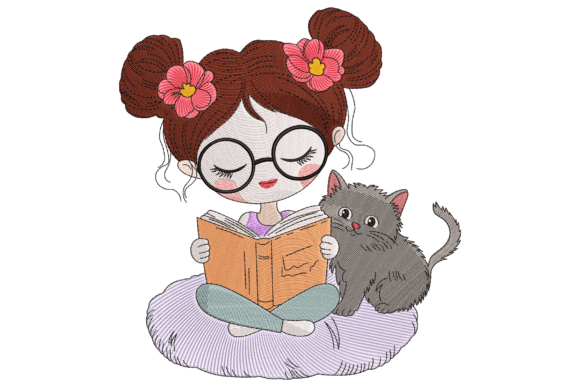
As an embroidery designer who has stitched out thousands of files for both personal joy and commercial client work, I approach every new machine embroidery design with a critical eye. It is not enough for a graphic to look cute on a screen; it must translate into thread, tension, and texture without frustrating the maker or disappointing the end user. When evaluating the "Book Girl with Cat" design, my first impression was one of immediate narrative charm. This isn't just a generic clip-art collection; it possesses a specific, cozy personality that speaks directly to the "dark academia," cottagecore, and book lover aesthetics currently dominating the handmade market. The composition suggests a quiet moment of reading, anchored by the presence of a feline companion, which adds that essential quirky flair mentioned in the product description.
For fellow Etsy sellers, craft business owners, and hobbyists, this review breaks down how this design actually performs when the needle hits the fabric. We are moving beyond the digital preview to discuss real-world application, stabilizer choices, and commercial viability for your next embroidery project.
Translating Digital Charm to Thread and Texture
The visual mood of Book Girl with Cat is undeniably nostalgic and warm, but as makers, we have to ask: how does this stitch out? In my evaluation, designs featuring books and animals require a careful balance of detail and durability. Books often involve straight lines and geometric shapes that can look stiff if the stitch density is too high, while cats require organic curves and fur texture that demand smooth transitions.
If this file utilizes fill stitch for the clothing and book covers, you will want to ensure the underlay is sufficient to prevent fabric distortion, especially on knits. If the cat features intricate facial details, check whether they are rendered in satin stitch or running stitch. Running stitch details are generally more forgiving on textured fabrics like linen tea towels, whereas dense satin columns can sometimes get lost or cause puckering on lighter materials. The interplay between the girl and the cat creates a natural focal point, making this an excellent candidate for center-chest placement on custom apparel or as a primary motif on a tote bag design.
Real-World Application: The Library Tote Bag Test
To truly judge the utility of this embroidery file, I mentally placed it in a specific production scenario: creating a line of canvas library tote bags for a local fall craft fair. Canvas is a sturdy, woven fabric that holds embroidery well, but it also highlights registration errors. For this finished product, Book Girl with Cat serves as more than decoration; it acts as a niche identifier. Customers browsing a booth aren't just buying a bag; they are buying into the identity of being a reader and a pet lover.
In this context, the design needs to be legible from a distance. The silhouette of the girl and the distinct shape of the cat must read clearly against the natural canvas color. If I were producing this handmade product, I would likely use a medium-weight cutaway stabilizer to support the canvas and prevent the design from pulling the bag's structure out of shape. The "quirky flair" mentioned in the description is exactly what sells at markets; it transforms a utilitarian object into a personalized gift that feels bespoke. For commercial embroidery purposes, this design has high perceived value because it targets a passionate subculture rather than a general audience.
Navigating Fabric Choices and Hoop Limitations
While Book Girl with Cat is versatile, no design is universal. As experienced decorators know, the success of an embroidered patch or garment depends entirely on matching the design characteristics to the substrate. Here is where you need to exercise caution and professional judgment:
- Stretchy Fabrics: If applying this to a lightweight jersey t-shirt or baby onesie, the weight of the stitches matters. Heavy fill areas combined with the movement of stretch fabric can lead to tunneling. Always use a fusible mesh cutaway stabilizer and consider topping with water-soluble film to keep stitches crisp.
- Textured Surfaces: On terry cloth towels or fleece blankets, fine details like the cat’s whiskers or book text may disappear. You may need to modify the file slightly or use a heavy-duty tear-away stabilizer with a topper to push the pile down and let the design shine.
- Hoop Size Constraints: Before purchasing or stitching, verify the dimensions against your machine’s capabilities. A design that looks balanced at 5x7 inches might lose its charm if resized down to 4x4 due to lost detail. Conversely, enlarging it significantly for a pillow cover requires checking if the digital embroidery file maintains stitch integrity at larger scales.
- Dark vs. Light Fabrics: High contrast is key. If stitching on dark denim or navy sweatshirts, ensure the thread colors provide enough pop. Sometimes, adding a white underlay beneath colored fills helps maintain vibrancy on dark backgrounds.
Commercial Viability for Makers and Sellers
For those running a craft business or managing an online shop, Book Girl with Cat offers distinct advantages for branding and listing optimization. In the crowded marketplace of Etsy seller goods, specificity wins. This design fits perfectly into seasonal niches like back-to-school (aligning with the School category), autumn reading challenges, and holiday gifting for teachers and librarians.
When creating printable mockups or listing photos, showcase the design on multiple substrates to demonstrate versatility. A photo of the design on a mug cozy alongside a photo of it on a sweatshirt embroidery project tells the buyer this is a flexible asset. However, professionalism extends to technical accuracy. Always confirm licensing terms before selling items featuring this design. While it is ideal for small shop product lines, ensuring you have the right to sell finished goods protects your business reputation and builds customer trust.
Essential Pre-Stitch Checklist for Success
Before you commit this design to a final product or list it in your shop, run through this practical designer’s checklist. These steps separate amateur results from professional-grade merchandise:
- Test Stitch Mandatory: Never skip the test sew. Use a scrap of the exact fabric and stabilizer combination intended for the final project. Check for registration issues, thread breaks, or excessive density.
- Verify File Specifications: Since specific stitch counts and formats vary, open the embroidery file in your software to confirm compatibility with your machine and hoop. Do not assume standard sizing.
- Color Contrast Check: View the design in grayscale or black and white within your editing software. If the elements blend together without color, the design lacks necessary contrast definition and may need adjustment.
- Stabilizer Matching: Match your stabilizer to the fabric weight, not just the design size. Lightweight fabrics need different support than heavy canvas, even for the same Book Girl with Cat file.
- Licensing Review: Double-check the usage rights. Confirm whether the license covers physical products, digital assets, or both, especially if you plan to scale your design assets library for commercial use.
- Wash Test: If selling baby embroidery items or kitchen linens, wash and dry your test piece. Ensure the stitches hold up and the fabric doesn't pucker after laundering.
Ultimately, Book Girl with Cat represents the kind of thoughtful, character-driven artwork that elevates machine embroidery from simple crafting to wearable art. Whether you are embellishing a holiday embroidery gift for a favorite teacher or building a cohesive collection for your boutique, this design brings a narrative warmth that resonates with buyers. By approaching it with technical mindfulness and creative intention, you ensure that the charm seen on screen translates beautifully into the tactile reality of thread and fabric.