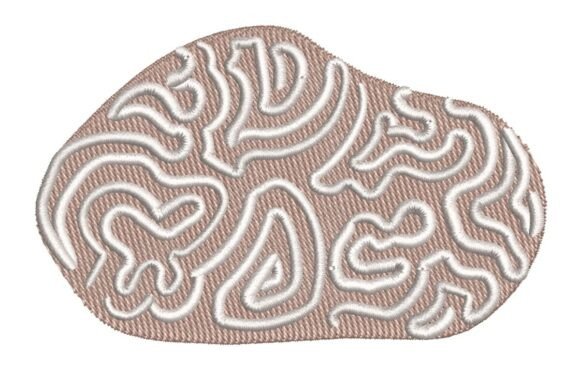
Abstract Brain Coral Embroidery Design Review
As a professional embroidery designer specializing in commercial branding and merchandise, I approach every new machine embroidery design with a critical eye toward production viability. When evaluating the Abstract Brain Coral Embroidery Design for small business applications, my primary focus is not just aesthetic appeal, but how this stylized representation of Platygyra coral translates from screen to fabric. This review assesses the design’s suitability for branded patches, staff uniforms, and boutique merchandise, ensuring it meets the rigorous demands of commercial embroidery.
Visual Personality and Brand Identity Impact
The first impression of the Abstract Brain Coral Embroidery Design is distinctly organic yet structured. Unlike rigid geometric logos or traditional floral motifs, the convoluted patterns of this design offer a unique texture that reads as both intellectual and natural. For businesses in creative sectors—such as art studios, botanical shops, educational institutions, or eco-conscious brands—this visual language communicates sophistication without being overly formal.
In terms of brand identity, this design avoids the generic clip-art look that often plagues small business merch. The irregular, organic shape suggests a handmade product aesthetic even when machine-stitched, which builds customer trust and perceived value. However, because the form is abstract, it relies heavily on execution. If digitized correctly, it feels premium and modern; if poorly managed, the intricate lines can become muddy. For a school category application, such as a science club patch or an environmental studies department logo, the brain coral motif serves as an excellent symbolic bridge between biology and art, offering a more mature alternative to standard cartoon mascots.
Performance Across Merchandise Applications
When integrating this embroidery file into a product line, versatility is key. Based on the description of the main form as an organic, irregular shape, here is how I evaluate its performance across specific business assets:
- Embroidered Patches: This is the strongest use case. The self-contained, irregular shape works beautifully as a standalone patch. Because brain coral patterns are naturally dense, they hold their structure well on twill backing. Ensure the border stitch accommodates the uneven edges to prevent fraying.
- Apron Embroidery: For cafés, florists, or bakeries, placing this design on the chest or pocket area adds artisanal flair. The texture mimics craftsmanship, aligning perfectly with handmade goods. The organic flow sits comfortably on canvas or denim aprons without looking stiff.
- Tote Bag Design: On unstructured cotton totes, this design provides necessary visual weight. The intricate internal details prevent the design from looking like a flat blob on coarse fabric. It serves as an excellent anchor for additional text or brand names.
- Cap Embroidery: Use caution here. While visually striking, the irregular shape must be centered carefully on curved fronts. If the design extends too far vertically, it may distort. This works best as a side accent or a scaled-down center logo rather than a full-front coverage piece.
- Staff Uniforms: As a sleeve detail or nape-of-neck logo, the Abstract Brain Coral Embroidery Design offers subtle branding. It is distinct enough to be recognizable at a glance but complex enough to invite closer inspection, enhancing the professional presentation of service staff.
Production Considerations and Technical Constraints
While the aesthetic potential is high, the technical reality of stitching convoluted Platygyra patterns requires careful planning. As an experienced digitizer, I must highlight where this design demands respect during production.
Stitch Density and Fabric Texture
Brain coral patterns are inherently detailed. High stitch density is often required to define the ridges and valleys of the coral structure. On lightweight fabrics or performance wear, this density can cause puckering or distortion. Always pair this design with appropriate stabilizer; a cut-away backing is generally superior to tear-away for maintaining the integrity of organic shapes over time. Conversely, on heavy fabric texture like fleece or terry cloth, the fine details may get lost. In such cases, consider using a topping or slightly increasing column widths to ensure the pattern remains visible.
Sizing and Detail Retention
The "irregular shape" mentioned in the product description presents challenges for minimum sizing. Unlike a circle or square, an organic form has varying distances from the center. When reducing this digital embroidery file for small patches or sleeve cuffs, verify that the internal convolution does not merge into a solid mass of thread. Test the smallest intended size before bulk production. If the details disappear below 2 inches, reserve this design for larger formats like tote bags or jacket backs, and select a simpler mark for tiny applications.
Thread Colors and Contrast
This design relies on shadow and light to create the 3D effect of coral. Using a single flat color may render it as a confusing maze. I recommend testing thread colors that offer tonal variation or utilizing variegated threads to enhance the topographical feel. For dark uniforms, ensure sufficient contrast; a dark grey coral on a black shirt will fail to read as a brand asset. Lighter, warmer tones typically perform best against dark backgrounds to maintain visibility and professionalism.
Designer Notes for Commercial Success
Before loading this Abstract Brain Coral Embroidery Design into your machine for a client order or inventory run, follow this professional checklist to ensure quality and compliance:
- Verify Specifications: The product description notes the shape and style but does not specify exact stitch count, hoop size, or format compatibility. You must confirm these technical details match your equipment capabilities before purchase or production.
- Create a Printable Mockup: Never assume scale. Generate a printable mockup at actual size and tape it to the intended garment. This reveals whether the irregular shape balances correctly on the specific item, especially for asymmetrical placements.
- Test in Monochrome: Before committing to multi-color palettes, stitch a test run in black and white. This strips away color reliance and proves whether the digitizing itself carries the design's depth and clarity.
- Check Licensing: Confirm commercial licensing terms explicitly. Just because a file is available does not mean it is cleared for selling finished products or mass-producing staff uniforms. Protect your business by validating usage rights.
- Compare Design Assets: Place this design beside your existing logo and typography. Does the organic complexity clash with minimalist branding, or complement it? Visual consistency across all design assets is crucial for customer recognition.
- Wash Test: If this is for workwear or frequent-use items like aprons, wash the sample three times. Intricate textures can degrade if underlay stitches are insufficient. A durable finished product reflects directly on your brand's quality standards.
Elevating Small Business Merchandise
The Abstract Brain Coral Embroidery Design represents a shift away from safe, predictable corporate logos toward more expressive, textured branding. For Etsy sellers, creative studios, and niche retailers, this level of detail signals care and intentionality. When executed with proper attention to stabilizer, sizing, and thread selection, it transforms standard custom apparel into conversation pieces.
However, success lies in respecting the design's complexity. It is not a plug-and-play solution for every fabric or size. By treating this embroidery file as a specialized asset rather than a generic graphic, you leverage its unique organic beauty to build a memorable, tactile brand experience. Whether used as a signature patch for a marine biology program or an elegant mark for a sustainable bakery, this design delivers professional results when approached with technical discipline and creative vision.